GUTIERREZ MEMORIAL FUND
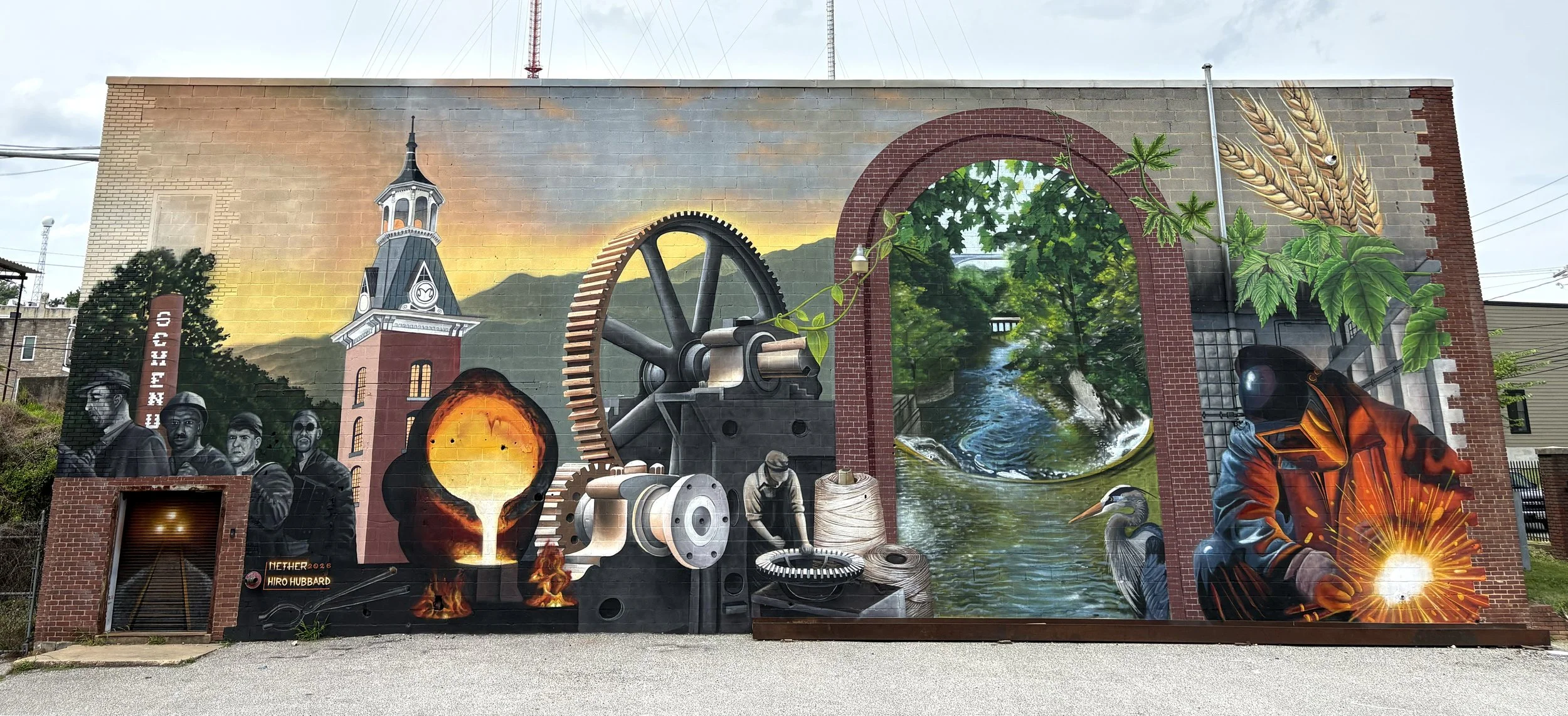
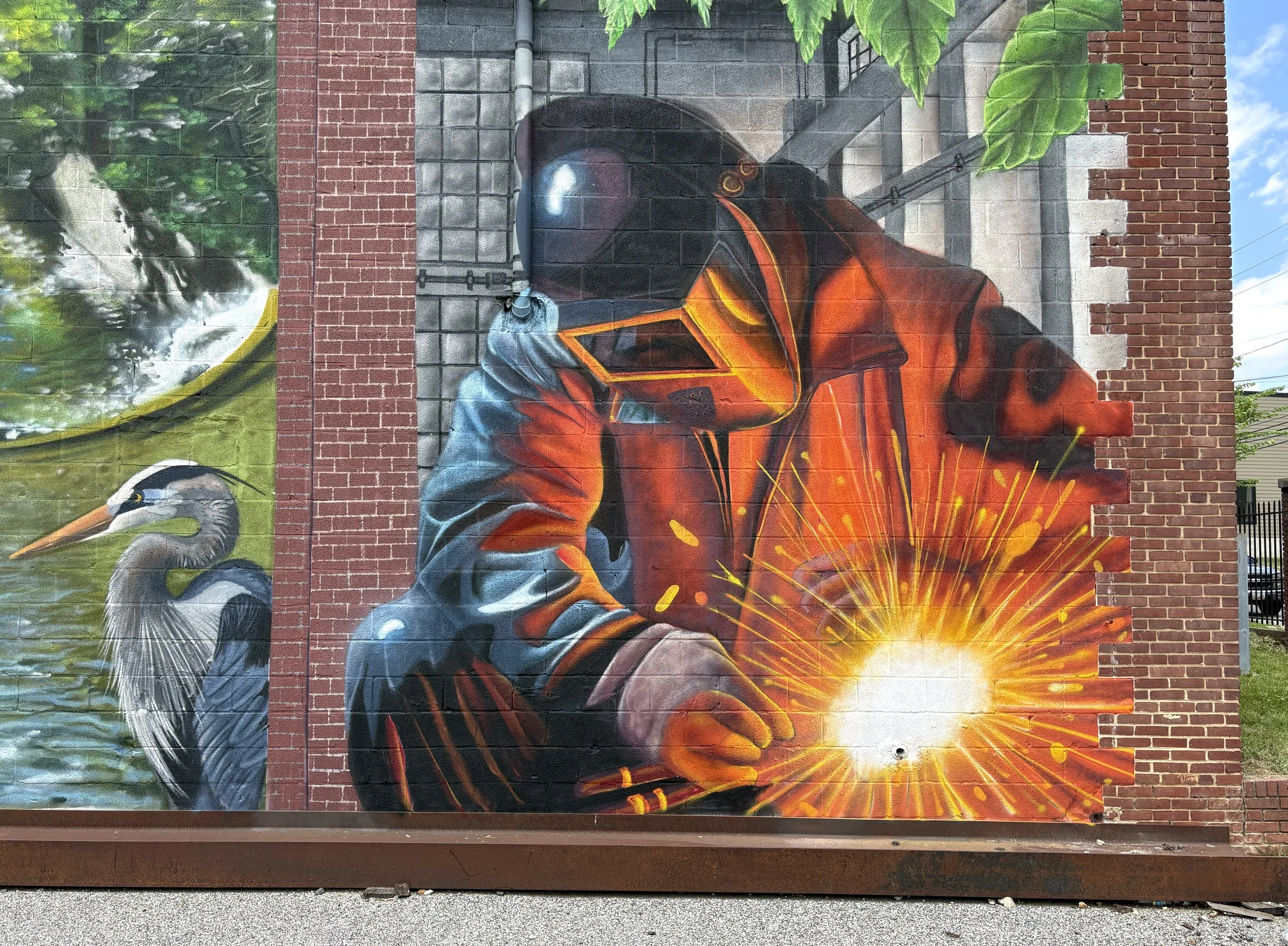
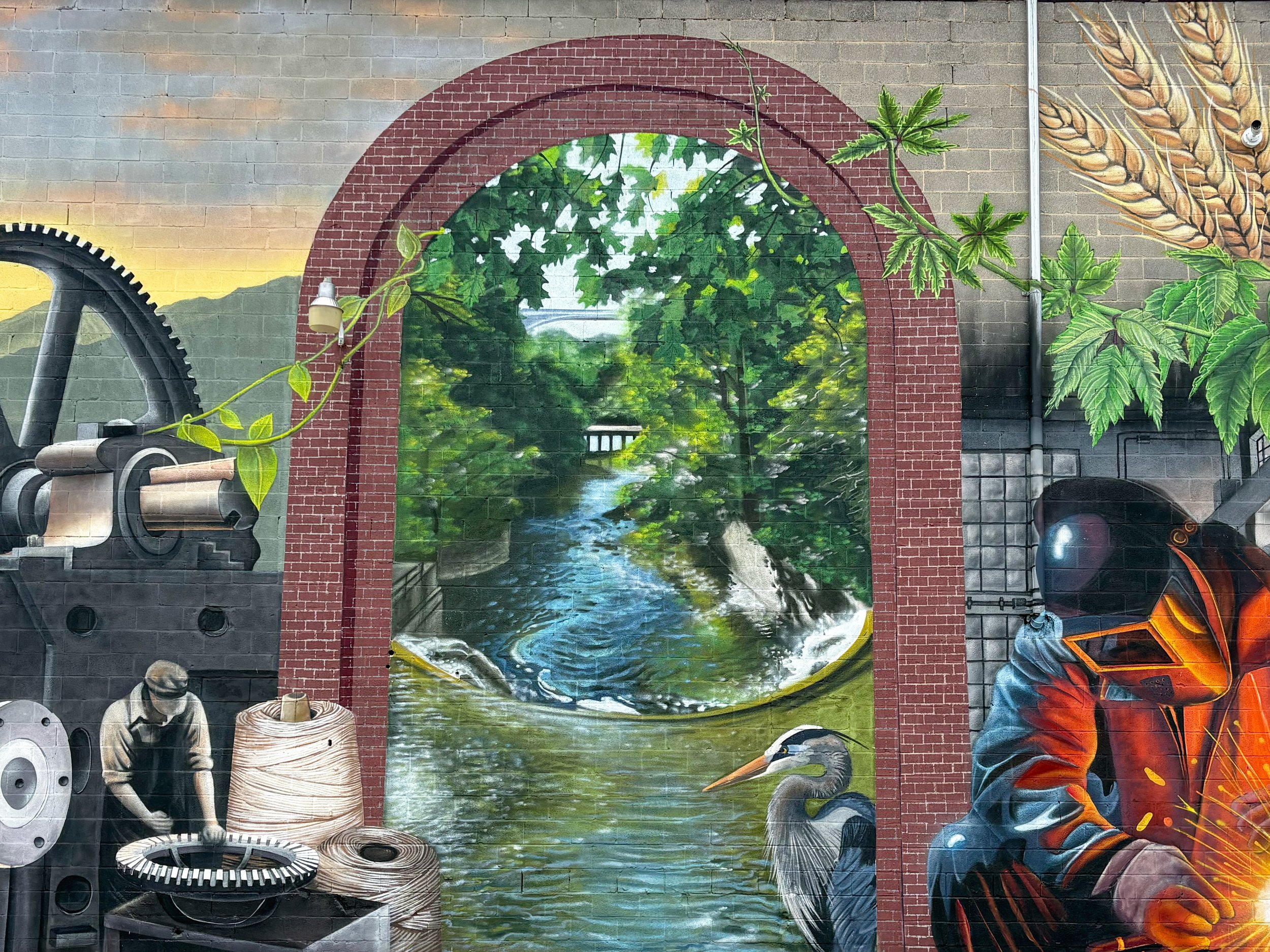
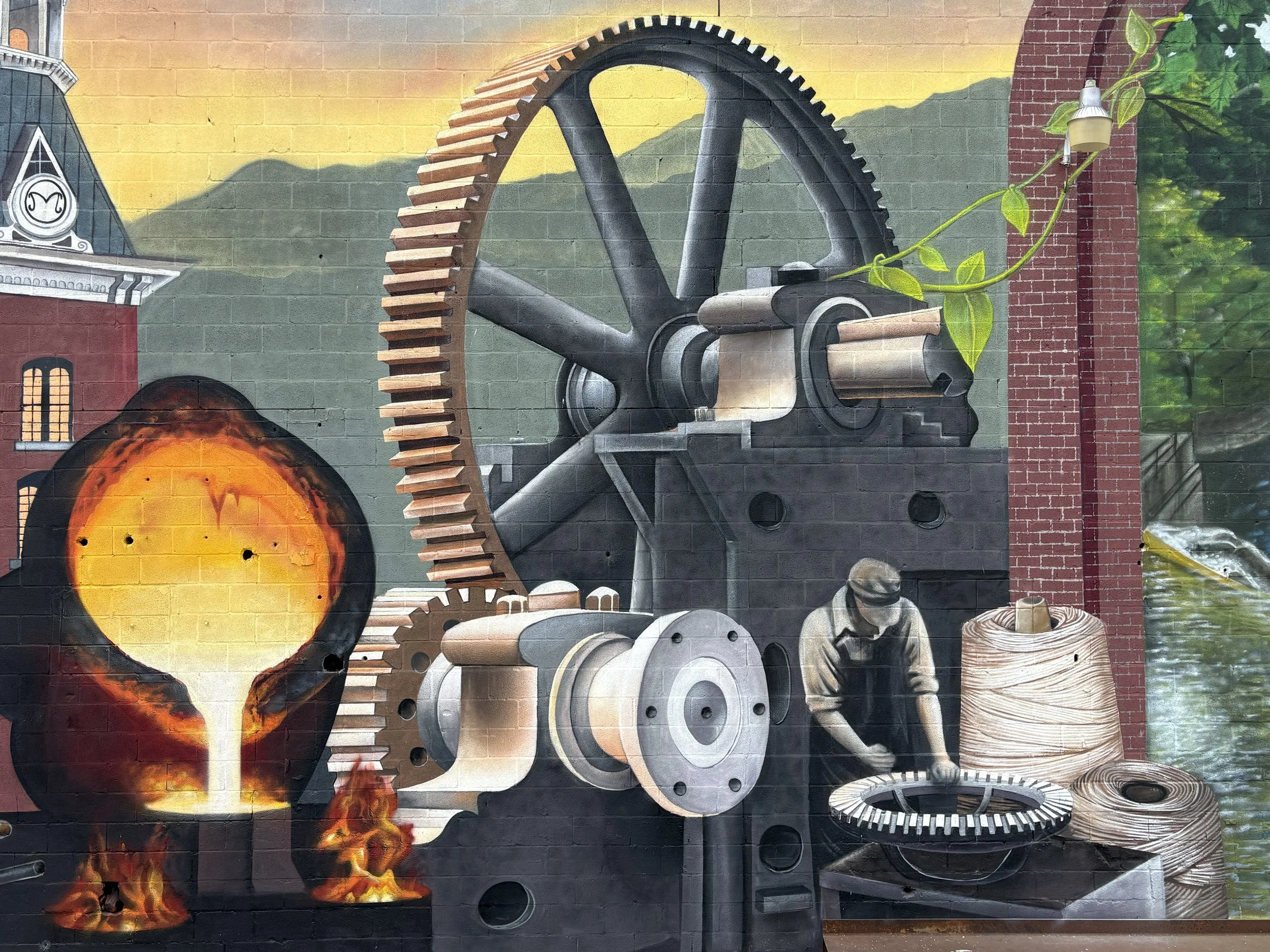
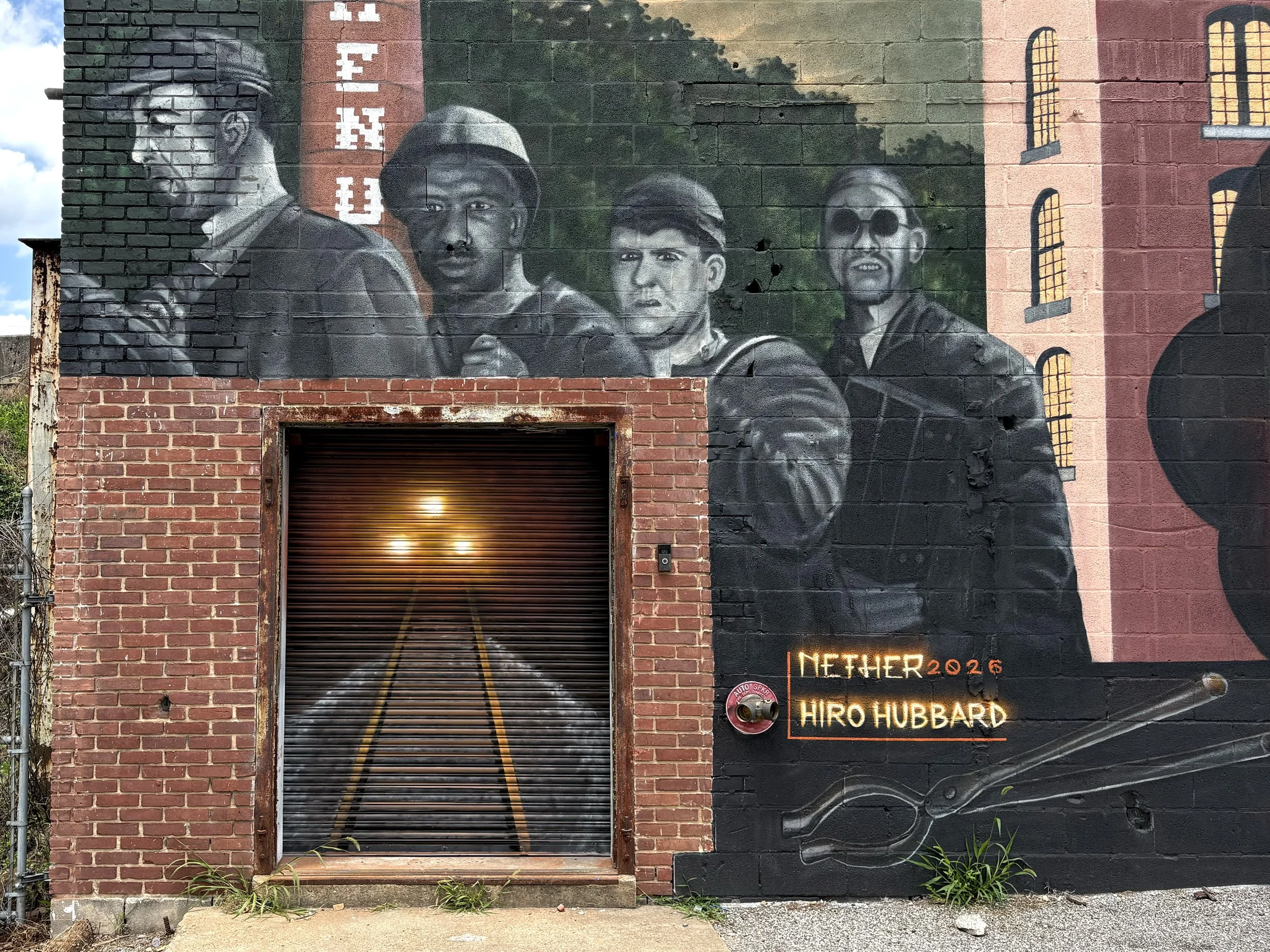
A 73’ x 28’ mural that pays homage to the industrial past and its influence on modern artisans in the Woodberry Neighborhood of Northwest Baltimore. The design compositionally centers around the waterway that brought industry and people to the Woodberry Area: the Jones Falls river. The scene is framed by one of the iconic building windows of the former Poole and Hunt Company building. The left side depicts workers lining up to clock in, sourced from archival photos from the era. It also includes images of the Shenuit Rubber Factory smokestack and the Meadow Mill steeple. We transformed the recessed roller gate door in the bottom left corner into a train tunnel, as railroading was essential to the neighborhood’s industries and freight trains used the same tracks that the MTA light rail uses today. The center details machinery of early Clipper Mill industry: the molten iron casting process and historic images of a large factory gear and worker from Poole and Hunt Company, sourced from the Baltimore Museum of Industry archives. As the cotton industry was part of Clipper Mill’s past and the mural is painted on the side of the modern cotton production warehouse, Hooper Industries, we also included cotton spools at the base of the gear. The far right side depicts a modern image of a welder at work in a warehouse with sparks flying in all directions, showing modern industry still present in Clipper Mill. Above the welder are native Virginia creeper vines found in the nearby Druid Hill park. Above the vines in the top right corner is the wheat plant Triticum, a reference to the flour production that once played a large role in Clipper Mill. The backdrop of the mural is a dusk image of the Appalachian Mountains, as many workers migrated to the area’s mills and industries from the rural mountainous regions of Maryland, Pennsylvania, and West Virginia. I partnered with fellow artist, Nether to execute all phases of this project that was made possible by the Gutierrez Memorial Fund. Content for the mural was determined through an extensive community engagement process in collaboration with the Woodberry Community Association. We interviewed legacy business owners, employees, and residents to learn about neighborhood history and determine content for the design. This mural was painted using a combination of Sherwin Williams acrylic latex applied with a Graco QuickShot paint sprayer and Montana 94 spray paint.